
Sanlam moves to take full control of Santam in landmark buyout
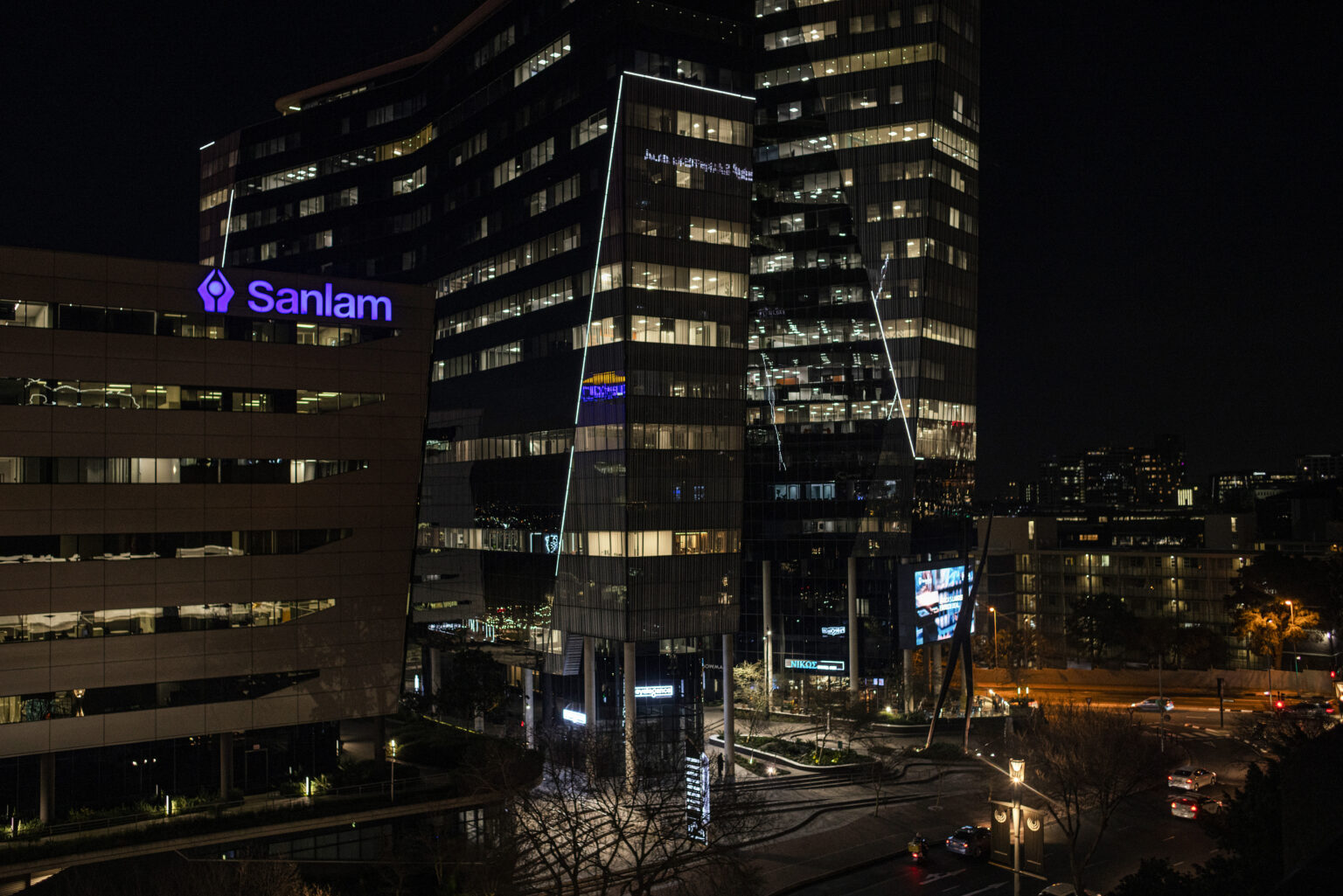
A Sanlam office building in Johannesburg. Image: Michele Spatari/Bloomberg
Sanlam and Santam announced the proposed transaction on Monday, 5 October 2026, after entering into an implementation agreement under which Sanlam, through its wholly owned subsidiary Sanlam Life, will acquire all Santam shares it does not already own.
Sanlam currently holds an effective 62.7% stake in Santam, excluding treasury shares. The proposed deal would take that holding to 100%, subject to the necessary shareholder, regulatory and other conditions being satisfied.
The offer values each eligible Santam share at R505 in cash.
That represents a 26.6% premium to Santam’s closing share price on 2 October, as well as a 25% premium to its 30-day volume-weighted average price and a 28.6% premium to its 90-day VWAP.
Santam's JSE exit
The transaction would mark the end of Santam’s separate existence on the JSE.
If the scheme is implemented, Santam’s shares will be automatically delisted from the JSE’s Main Board, while applications will also be made to terminate its listings on the Namibian Stock Exchange and A2X. No additional shareholder approval will be required for the JSE delisting once the scheme has been implemented.
That would bring to a close Santam’s public-market journey, which dates back to 1964.
Santam had a market capitalisation of R43.9 billion as at 2 October 2026, according to the SENS announcement.
Why Sanlam wants Santam outright
Sanlam is already in control of Santam, making the proposed transaction less about acquiring control and more about removing the remaining minority interest and simplifying the group.
The companies say full ownership will eliminate the structural constraints created by maintaining Santam as a separately listed subsidiary.
Sanlam expects the move to simplify governance and reporting, improve strategic coordination and provide greater flexibility around capital allocation and the management of resources across the group.
It also expects to eliminate duplicated costs associated with maintaining two listed entities, including certain listing and governance expenses.
For Sanlam, the strategic argument is therefore straightforward: if it already controls Santam, bringing the insurer fully inside the group gives it greater freedom to determine how the two businesses work together.
More than a century of ties
The transaction also represents a significant moment in a relationship that stretches back more than 100 years.
Sanlam and Santam have developed a close commercial and strategic relationship over generations, with Sanlam supporting Santam’s position as a leading general insurer in South Africa.
The companies argue that full consolidation is the logical next step.
They say the simplified structure should allow the enlarged Sanlam Group to better combine its expertise, pursue growth opportunities and develop a more integrated proposition across general insurance, life insurance, investments and other financial services.
For Santam, Sanlam says full ownership will also provide the business with continued access to the group's capital strength, scale and broader capabilities.
A premium exit for minority shareholders
For Santam’s minority investors, the proposed transaction provides a cash exit at a sizeable premium to the market price.
The R505 offer is above Santam’s closing price of R399 on 2 October and also sits above the insurer’s previous all-time share-price high of R451.70.
Santam’s independent board has already thrown its weight behind the proposal.
After considering the transaction and consulting with the independent expert, the board has unanimously supported the scheme and intends to recommend that eligible shareholders vote in favour of it.
Rand Merchant Bank has been appointed as the independent expert to assess whether the terms of the transaction are fair and reasonable to Santam shareholders.
This is not a done deal
Despite the strong support from Santam’s independent board, the transaction still has several hurdles to clear.
The scheme requires approval by the requisite majority of eligible shareholders at a general meeting, including at least 75% of the voting rights exercised on the scheme resolution.
It is also subject to various regulatory approvals, including requirements involving the Takeover Regulation Panel, the Prudential Authority, the Financial Surveillance Department and the JSE.
The SENS announcement sets 31 March 2027 as the longstop date for the scheme conditions, although that date can be extended under the terms of the agreement, subject to the stated conditions.
The combined offer circular, containing the full terms of the transaction, the independent expert’s report, the board recommendation and the proposed timetable, is expected to be posted around 3 November 2026.
The end of an era
If shareholders and regulators give the transaction the green light, Santam will move from being a separately listed company controlled by Sanlam to becoming a wholly owned subsidiary of Sanlam.
That is a significant change for both companies.
For Sanlam, it simplifies the group and gives it full economic ownership of a business it has controlled for years.
For Santam, it closes a chapter that began with its JSE listing in 1964.
And for South Africa’s capital markets, it removes another major company from the local exchange.
After more than a century of partnership and more than six decades as a listed business, Santam’s next chapter could be written entirely inside the Sanlam Group.