
Huawei and Xiaomi take aim at Apple with new foldables — and South Africans could be next
The launches come just days before Apple is expected to unveil its first foldable iPhone, potentially marking a major shift in the premium smartphone market.
For South African consumers, the battle is particularly relevant. Huawei already has a meaningful presence in the local market, while Xiaomi has been expanding its footprint as consumers increasingly look beyond Apple and Samsung for high-end devices.
Data from StatCounter shows Samsung remained South Africa's dominant smartphone brand in August 2026 with a 45.9% share, followed by Apple at 24.8%. Huawei accounted for 9.7%, while Xiaomi stood at 3.4%.
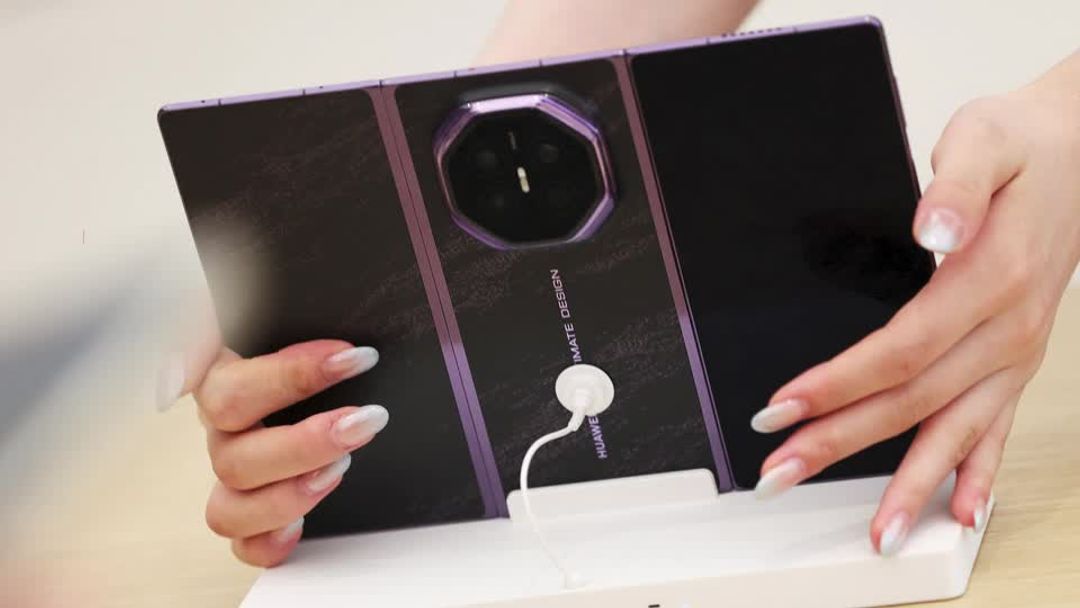
Huawei goes all-in on the tri-fold Huawei's latest flagship, the Mate XT2, pushes foldable technology further by using two hinges to transform a conventional smartphone into a tablet-sized device.
The company has upgraded the hinge system, improved water resistance and added a privacy feature designed to restrict viewing angles, while the handset is powered by Huawei's new Kirin 9050 Pro processor.
The Mate XT2 starts at around R48,000, with the top-end model reaching approximately R60,000 based on current currency conversions. Sales in China are scheduled to begin on 12 September.
Huawei's original Mate XT tri-fold is already listed on Huawei's South African website, showing that the company is willing to bring its most experimental foldable technology to the local market.
That makes a South African launch of the newer model a possibility, although local availability, pricing and launch timing have not been confirmed.
Xiaomi takes a different approach Xiaomi's new 18 Fold takes a more conventional approach to foldable smartphones.
Rather than folding twice, the handset uses a book-style design that remains relatively compact when closed and expands into a larger display when opened. Xiaomi says the device can run three applications side by side, positioning it as both a smartphone and productivity device.
The company has also developed its own XRing O3 processor for the handset and is pitching performance as a key advantage over competing premium devices.
Chinese pricing starts at roughly R25,000, rising to about R34,000 depending on the configuration.
That price positioning could be particularly important if Xiaomi eventually brings the device to South Africa.
The local market has traditionally been highly price-sensitive, and Xiaomi has built much of its reputation around delivering flagship specifications at prices below those of established premium competitors.
South African foldable buyers face a very different market
The biggest question is not whether the technology is impressive, but whether South African consumers will be prepared to pay premium prices for it.
Foldables remain a relatively small part of the overall smartphone market, but manufacturers see them as an important way of differentiating premium devices as conventional smartphones become increasingly similar.
For South African buyers, however, the cost of a foldable is only part of the equation.
Availability of local warranties, replacement screens, repairs, software support and financing options could ultimately determine whether these devices gain traction.
This is particularly important with a tri-fold device such as the Mate XT2, where the additional hinges and flexible display technology introduce greater engineering complexity.
Apple could change the market
The biggest development may still be coming.
Apple is expected to unveil its first foldable iPhone this week, with reports suggesting the device could sit firmly in the ultra-premium segment and potentially cost more than $2,500.
Apple's entry could significantly increase consumer awareness of foldable smartphones.
It could also give the category a major boost among existing iPhone users who have so far been reluctant to move to Samsung, Huawei or other Android-based foldables.
That could be particularly significant in South Africa, where Apple already commands almost a quarter of the smartphone market, according to StatCounter.
Chinese manufacturers are already ahead
Huawei is entering Apple's potential foldable debut from a position of strength in China.
The company accounted for approximately 68% of China's foldable smartphone shipments in the second quarter of 2026, according to Smart Analytics Global. Huawei also led China's overall smartphone market with a 22.6% share, ahead of Apple's 18.1% and Xiaomi's 12.4%.
The competition is therefore no longer simply about screen size or camera specifications.
Huawei and Xiaomi are increasingly developing their own processors, operating systems, artificial intelligence capabilities and hardware technologies.
That represents a broader shift in the global smartphone industry, with Chinese manufacturers attempting to control more of the technology stack rather than relying entirely on Western semiconductor and software suppliers.
What it means for South Africans
For local consumers, the immediate impact may be limited if the newest models remain restricted to the Chinese market.
But the competition could eventually benefit buyers.
As Huawei, Xiaomi, Samsung and Apple compete for the premium segment, manufacturers will have greater incentive to improve foldable durability, reduce thickness and weight, extend battery life and make these devices more practical for everyday use.
The biggest potential winner may therefore not be a particular smartphone brand, but the consumer.
South Africa's premium smartphone market is already dominated by Samsung and Apple, but Huawei's established local presence and Xiaomi's growing position give Chinese manufacturers a route to challenge that duopoly.
If Apple does launch its foldable iPhone as expected, 2026 could mark the point at which foldables move from an expensive smartphone experiment into the mainstream premium-device battle.